

The right way to finance a multi-family property in La Verne depends on the building, how you plan to use it, and your borrower profile. A property with two to four units may fit residential financing, while one with five or more units often involves commercial financing. If you’re searching for “how to finance a multi-family property La Verne,” DSCR loans in California may be one option for an investment property, subject to the full file and program guidelines.
Rental income, self-employment income, repairs, and the property’s unit count can all affect the financing discussion. Start with the property’s current facts and your plan for it, rather than assuming one loan type will fit.
This article explains how to compare possible financing paths, review carrying costs, and prepare for a useful conversation. The same approach applies to multifamily purchases in La Verne and nearby Southern California communities such as Pomona, Claremont, San Dimas, Glendora, Rancho Cucamonga, Ontario, Chino Hills, and West Covina.
Key Takeaways
- How to finance a multi-family property La Verne depends on the building, intended use, borrower profile, and project goals.
- Conventional, DSCR, bridge, hard money, and renovation or construction financing are different paths to compare, not assumed approvals.
- Review rent records, operating costs, vacancy assumptions, repairs, and carrying costs before judging a deal.
- Gather property details, current leases, repair information, and borrower documents before discussing financing.
- Match the financing discussion to the property’s needs and your plan for holding or exiting the investment.
What should you identify before financing a La Verne multifamily property?
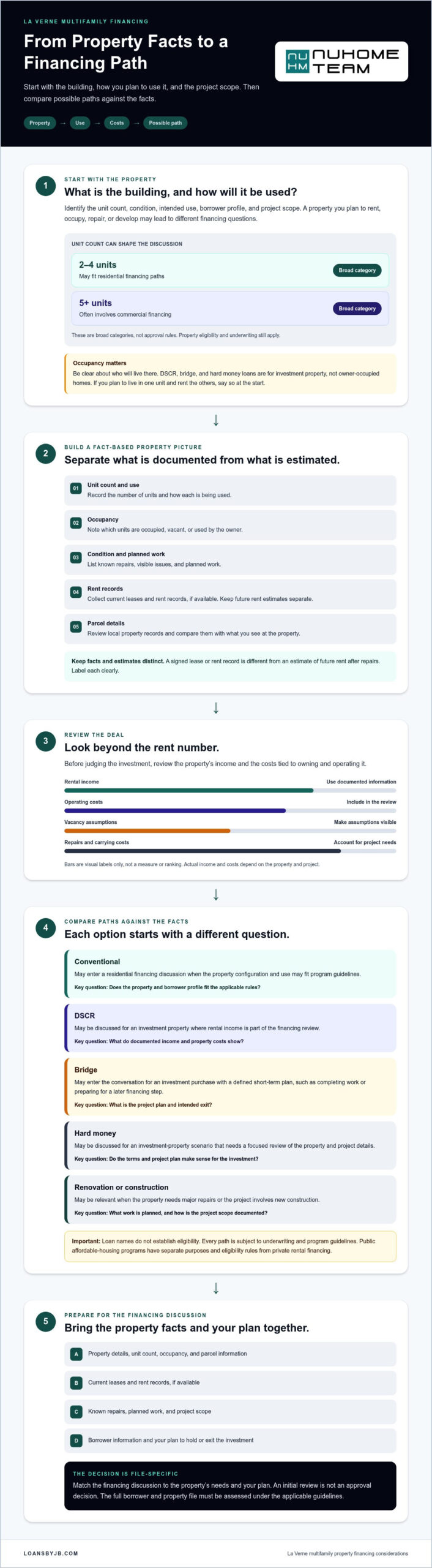
How to finance a multi-family property La Verne depends on the building’s setup, intended use, borrower profile, and project scope. First, decide whether you’re buying a rental, a home you’ll occupy, a property to repair, or a site for a larger development. For an investment property, DSCR loans in California may be one path to discuss, depending on the full file and program guidelines.
Unit count can also shape the discussion. A building with two to four units may be considered through residential financing paths, while a property with five or more units often involves commercial financing. These are broad categories, not approval rules. Property eligibility and underwriting still apply.
Is the property an investment or an owner-occupied purchase?
Be clear about who will live in the property and how you plan to use it. Occupancy can affect which financing paths are relevant. DSCR, bridge, and hard money loans are for investment property, not owner-occupied homes. If you plan to live in one unit and rent the others, say so at the start. The financing discussion needs to match your actual occupancy plan.
What property facts should a La Verne buyer gather?
Build a basic picture of the property before comparing loan paths. Gather records that show its current condition and use, and keep those facts separate from your plans for the property.
- Unit count: Record the number of units and how each one is being used.
- Occupancy: Note which units are occupied, vacant, or used by the owner.
- Condition: List known repairs, visible issues, and planned work.
- Rent information: Collect current leases and rent records, if available.
- Parcel details: Review local property records and compare them with what you see at the property.
Separate documented facts from estimates. A signed lease or rent record is different from an estimate of future rent after repairs. Label each clearly. That gives the financing discussion a grounded starting point.
State the project purpose plainly, too. Buying a property that already operates as a rental is different from buying one that needs rehabilitation or planning a larger development. Public affordable-housing programs may serve specific housing purposes. That is separate from an individual investor’s private financing question. Start with the property, intended use, and borrower information for the private loan discussion.
An initial review is not an approval decision. The lender must assess the complete borrower and property file under the applicable underwriting and program guidelines. Gather the facts first, then compare possible paths without treating any one option as a sure fit.
Which financing paths may fit a multifamily purchase?
The paths to compare depend on the property’s unit count, condition, intended use, and your borrower profile. For a private rental investment, conventional, DSCR, bridge, hard money, or renovation and construction financing may be worth discussing. The Nuhome Team works with these financing options. Each is subject to underwriting and program guidelines, so the name of a loan does not establish eligibility.
| Path to explore | When it may enter the discussion | Key question |
|---|---|---|
| Conventional | A residential financing discussion for a property configuration and use that may fit program guidelines. | Does the property and borrower profile fit the applicable rules? |
| DSCR | An investment property where rental income is part of the financing review. | What do the property’s documented income and costs show? |
| Bridge | An investment purchase with a defined short-term plan, such as completing work or preparing for a later financing step. | What is the project plan and intended exit? |
| Hard money | An investment-property scenario where the property and project details need a focused review. | Do the terms and project plan make sense for the investment? |
| Renovation or construction | A property that needs major repairs or a project involving new construction. | What work is planned, and how is the project scope documented? |
When might a DSCR investor loan enter the conversation?
DSCR financing considers the investment property’s income as part of the review. The lender may also assess the borrower, property, and other details under its guidelines. Start with documented rent and property costs, not a best-case estimate of future rent. A possible fit depends on review of the full file and applicable program rules.
When might renovation, bridge, or construction financing be relevant?
Property condition and project scope can change the conversation. A property needing repairs may call for renovation financing, while a larger building project may raise construction financing questions. Bridge and hard money loans are business-purpose options for investment property, not owner-occupied homes. The planned work can help frame a discussion of renovation and construction loan options.
California HCD affordable-housing funding is a separate category. It serves specified housing purposes and is not ordinary financing for any private rental purchase. HUD also describes its Multifamily Housing Programs. Public programs have their own purposes and eligibility rules. First decide whether your project is a private investment or an affordable-housing effort that may fit a public program.
For a La Verne multifamily purchase, compare the actual property and project with the purpose of each financing path. A clear review of income records, planned work, and intended exit can make the discussion more focused. Any option remains subject to review of the full file and program guidelines.
How can you assess the La Verne deal before choosing a loan path?
Review the property’s income, costs, condition, and your plan for holding or selling it before comparing financing paths. Use records where you have them, and label projections as estimates. A cash-flow worksheet can help you ask better questions, but it is not a lender decision.
What belongs in a simple property cash-flow review?
Start with the rent the property collects. Then subtract operating costs and the debt obligation you are evaluating. Account for possible vacancy and set aside a reserve for repairs or other unexpected costs. The result is a planning tool, not a promise of future performance.
- Collected rent: Use current leases and payment records where available.
- Operating costs: Gather documented costs tied to running the property.
- Vacancy: Include a planning assumption and label it as an estimate.
- Repairs and reserves: Note known work and funds you may need to keep available.
- Debt obligation: Compare the property’s cash flow with proposed financing terms once you have them.
Keep records separate from projections. A signed lease is not the same as a guess about future rent, and a planned rent increase is not current collected income. For broader context on institutional multifamily financing, see Fannie Mae Multifamily Financing. Your property and borrower file still need a direct review.
Example only. Use your own verified figures in this outline: documented monthly rent of [rent], minus monthly operating costs of [costs], minus a vacancy and repair reserve of [reserve], leaves [amount before debt] for comparison with the proposed debt obligation. These placeholders are not market figures or loan terms. Replace them with records and estimates that are clearly labeled.
How should condition and future plans affect the review?
Write down the repair scope, deferred maintenance you’ve observed, and improvements you plan to make. Separate a property that can operate as planned from one needing substantial renovation or ground-up development. The scope may affect which financing discussion makes sense. Construction plans may require a different review from a standard purchase.
Then match the financing discussion to your intended hold period and exit plan. A buyer planning to keep the property may weigh ongoing costs differently from someone planning to complete work and sell or refinance. Neither plan guarantees a particular loan path. Be ready to explain what could change your plan, such as repairs, vacancies, or a shift in your investment goals.
As you assess how to finance a multi-family property La Verne, treat the worksheet as a way to ask better questions, not as a final lending decision. A lender may review income, expenses, property condition, borrower details, and program rules together. Tax treatment and legal structure can affect your wider plan, so discuss those questions with your CPA or attorney. This worksheet is not tax, legal, zoning, or property-condition advice.
What should you prepare before discussing financing?
A useful financing conversation starts with a clear plan and records that show what you’re buying. Define the intended use, gather property details, and organize borrower documents before comparing paths. If you’re self-employed or have a complex income picture, say so early. The documents to discuss depend on your situation and the financing path.
- Define the plan. Explain whether you plan to rent the property, live in a unit, complete repairs, or develop the site.
- Gather property records. Collect available leases or rent records, unit count, occupancy details, purchase information, and repair notes.
- Organize borrower documents. Put available income, asset, debt, and business records in one place.
- Discuss possible paths. Review the property and borrower details together. Any financing option remains subject to underwriting and program guidelines.
Which property and borrower details help start the conversation?
Bring the purchase details, unit count, current occupancy, and what you know about the property’s condition. Current leases and rent records help show existing income. Repair notes, bids, or other details about planned work can help explain the project.
For your borrower file, organize income, assets, debts, and business records that may help explain your financial picture. Don’t fill gaps with guesses presented as facts. Instead, list open questions, such as missing rent records or unclear repair costs. That gives the discussion a practical starting point.
Self-employed borrowers and people with more than one income source may need a tailored documentation discussion. Relevant records depend on the borrower and financing path being reviewed. Share the full picture early, including business income or changes that may not be clear from one document alone. This helps keep assumptions out of the file.
Who does this fit, and who does it not fit?
This fits: Buyers evaluating a rental investment who want to compare financing paths using real property and borrower details. It can also help buyers with complex income prepare for a focused conversation.
This doesn’t fit: Anyone looking for guaranteed approval or a guaranteed payment. A financing discussion is not a substitute for legal or tax advice. Talk with your attorney or CPA about those questions. If you plan to live in the property, make that clear. Investment-purpose financing is not for owner-occupied homes.
For a clearer conversation about how to finance a multi-family property La Verne, bring your plan, property records, and borrower documents together. You can book a call to discuss your financing options with The Nuhome Team. The discussion can help identify questions to address next, but it does not promise approval or specific terms.
How can The Nuhome Team help you plan the next step?
Financing depends on the specific property, borrower, and investment plan. The Nuhome Team is a Southern California mortgage brokerage with an investor-focused approach. Justin Brown brings more than 25 years of experience in Southern California mortgage and real estate. He helps borrowers put property facts and financing questions into plain English.
What happens in a useful first financing conversation?
Start with the plan. Is this a rental purchase, a property you’ll occupy, a repair project, or a larger development? Then connect that goal to the unit count, current use, rent records, condition, borrower profile, carrying costs, and exit plan.
That full picture helps frame which paths may be worth discussing. A rental property with documented income raises different questions from a building needing substantial work. A borrower with self-employed or other complex income may also need a tailored documentation discussion. The details matter. A loan label alone can’t tell you whether a path fits.
The Nuhome Team offers residential and investment mortgage financing, including DSCR, hard money, fix-and-flip, renovation, and construction loan options. As a broker, the team has access to many loan programs rather than a single bank’s menu. Justin Brown is directly involved in client matters and explains possible paths in plain English. Underwriting and program guidelines determine eligibility. An initial conversation is for sorting through questions, not promising approval or timing.
How should you use the conversation?
Bring the records you have and be direct about what you don’t know yet. A useful discussion can help separate verified facts from estimates, identify questions that need more information, and connect the property’s carrying costs to your hold period and planned exit.
It can also help you decide what to prepare next. If rent records are incomplete, note that gap instead of presenting a projected amount as current income. If repairs are part of the plan, explain the scope and what is still uncertain. A clear starting point makes the financing discussion more focused.
For an investment property, nonstandard income, or a project with several moving parts, book a call with The Nuhome Team to discuss the property and financing questions. Start with the facts you have and the plan you’re considering.
Turn the property details into a clear next step
The right way to decide how to finance a multi-family property La Verne is to match the financing discussion to the deal you plan to pursue. You don’t need every answer before you start. A clear plan and honest notes about what’s still unknown can make the next conversation more useful.
For a property with moving parts, bring your questions and discuss possible paths with The Nuhome Team. Book a call with The Nuhome Team to talk through your property and financing questions.
Frequently Asked Questions
Can rental income help me finance a multifamily property?
Yes. Rental income may support a financing review, depending on the loan path and full file. Show how rent is tied to each unit, including gaps between tenants or leases ending soon. Rent can inform the review, but it does not ensure approval.
Is DSCR financing only for investment properties?
Yes. DSCR financing is business-purpose financing for investment property, not an owner-occupied home. If you plan to live in one unit, be clear about that before discussing this path. The full file and program guidelines determine eligibility.
Does California’s Multifamily Housing Program finance any rental property?
No. California’s Multifamily Housing Program is not a general-purpose source of financing for any rental purchase. It serves specified affordable-housing purposes, so the project’s goals and program rules matter. A private rental investment is a different financing question.
Can I finance a multifamily property that needs renovations?
Possibly. The scope of work can affect which financing path may be worth discussing. Prepare a written list of repairs and planned improvements, along with estimates or project details you have. Eligibility depends on the property, borrower, and program guidelines, so renovation needs alone don’t confirm a financing option.
This article is for general education only and is not a commitment to lend. All loans are subject to credit approval, underwriting, property eligibility, and program guidelines. Rates and terms can change without notice. LoansByJB (The Nuhome Team), NMLS #1647915, CA DRE #02039443. Equal Housing Lender.
Need the mortgage math checked?
Talk through the loan before you guess.
Use the estimator, request a refinance quote, or book a call with The Nuhome Team. We will help you compare the options that actually fit the file.
This is not a commitment to lend. Approval, terms, and pricing depend on credit, income, assets, property, and program guidelines.