

Bankruptcy changes the mortgage review, but it doesn’t automatically close the door to buying a home. If you’re wondering how soon a home loan after bankruptcy could be within reach, the answer depends on more than the date your case ended.
A Chapter 7 or Chapter 13 filing, damaged credit, or a past denial can make the process feel uncertain. Mortgage programs have different rules, and your case outcome, payment history, income, debts, and assets all help shape the review. A past denial is only one point in time, not a complete picture of your current finances.
This guide explains how bankruptcy can affect mortgage eligibility and timing, what a mortgage review may involve, and how to prepare your application. It also compares FHA, VA, conventional, and other financing paths so you can focus on options that fit your documented circumstances.
There’s no single timeline for everyone. Start by confirming your case outcome and dates, then consider your credit recovery, budget, and homebuying goals.
Key Takeaways
- A home loan after bankruptcy may still be possible. Your bankruptcy chapter, case outcome, finances, and mortgage program all shape the path.
- FHA, VA, and conventional mortgage timelines differ. Case dates and status can affect the waiting period, so use current program guidance for your circumstances.
- A mortgage review considers more than a credit score. Credit history, income, debts, assets, and housing payments contribute to the overall picture.
- Prepare before applying: gather bankruptcy records, review your credit reports for errors, and assess your budget before taking on new debt.
- Choose a mortgage strategy around your goals and current finances, with a personalized review of program fit and documentation.
Can You Get a Home Loan After Bankruptcy? Start With the Facts
Yes, a bankruptcy filing does not determine every future mortgage application. A home loan after bankruptcy depends on the details of your case and your finances today. The review may consider the chapter filed, whether the case ended in discharge or dismissal, your credit history, income, debts, assets, housing payment record, and the rules for the mortgage program. Approval is never automatic, so begin with your records rather than assuming a past denial tells the whole story.
First, confirm your case status. A discharge is a court order that releases you from personal responsibility for eligible debts covered by the bankruptcy. A dismissal means the case closed without a discharge. The filing itself is not the same as either outcome, and the relevant dates can matter in a mortgage review. Check your court paperwork and case records. For basic background on the U.S. process, see Bankruptcy in the United States. Consult a bankruptcy attorney about the legal effect of your case.
What mortgage lenders may review after bankruptcy
A mortgage review involves more than a score or bankruptcy notation. It may include your full credit file, current income and employment, monthly debt obligations, available assets, and housing payment history. The bankruptcy’s timeline and status put those details in context. Review your credit report for unfamiliar accounts, incorrect balances, or inaccurate case information, and address errors before applying.
Mortgage readiness means your current finances and credit history can be reviewed against the applicable mortgage program’s rules. It’s a practical assessment, not a promise of approval.
Why Chapter 7 and Chapter 13 are not interchangeable
Chapter 7 generally involves the liquidation of eligible nonexempt assets to address debts, while Chapter 13 generally involves a court-supervised repayment plan. These are broad descriptions, not legal advice. The effect of a filing depends on the individual case. A bankruptcy attorney can explain how the process applies to your circumstances.
Mortgage programs can treat the chapters differently. The review may also depend on whether a case was discharged or dismissed and when that happened. Other credit events can affect the application, too. Don’t rely on a timeline without matching it to your chapter, case outcome, and program. Organize your case records so the relevant dates and status are clear.
How Mortgage Waiting Periods After Bankruptcy Differ by Loan Program
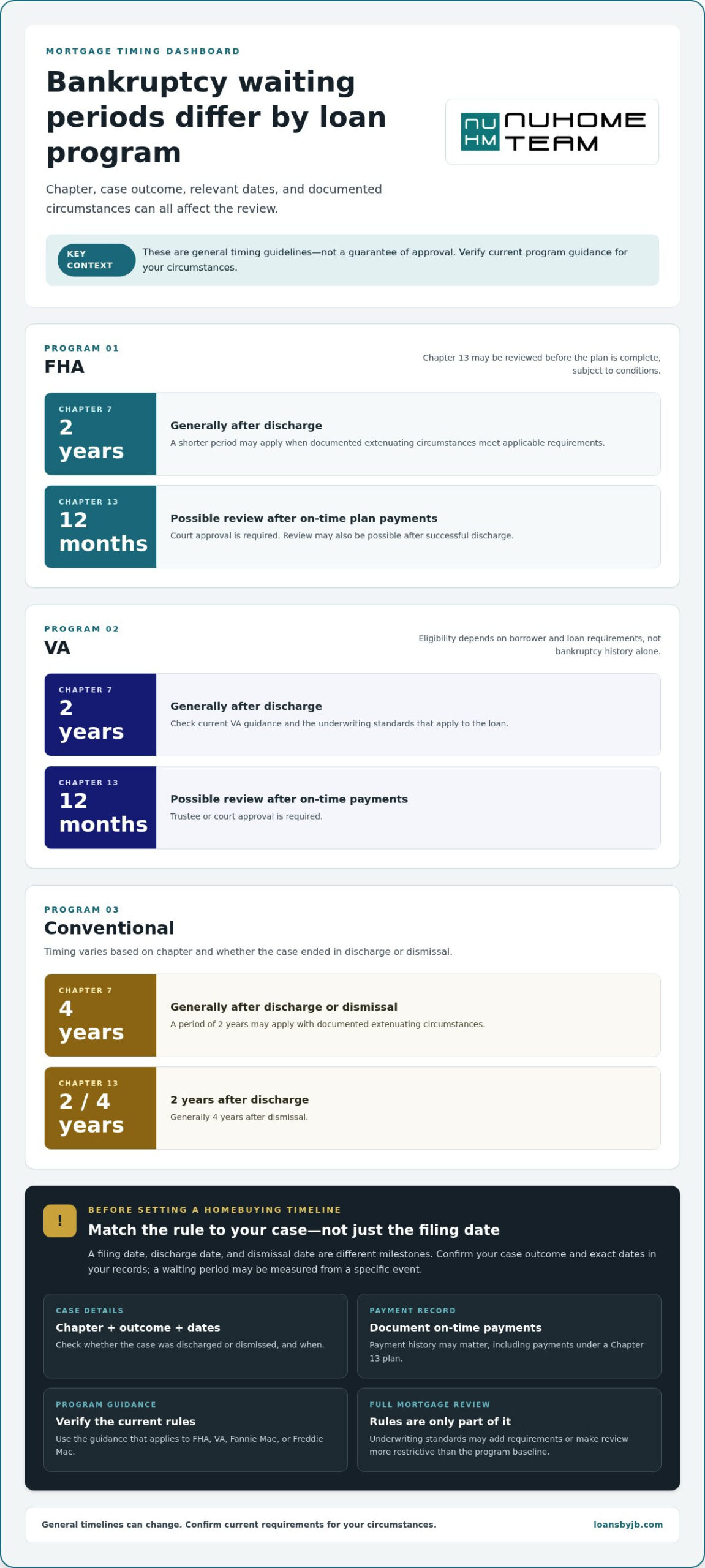
There’s no single waiting period for every borrower and mortgage program. The chapter, case status, relevant dates, later credit events, and documented circumstances can all affect the review. Use the figures below as a starting point, then compare them with current program guidance before setting a homebuying timeline.
| Loan program | General timing to verify | Key details to check |
|---|---|---|
| FHA | Chapter 7: generally 2 years after discharge; a shorter period may apply for documented extenuating circumstances. Chapter 13: review may be possible after 12 months of on-time plan payments with court approval, or after successful discharge. | Confirm the applicable FHA guidance, case outcome, dates, payment record, and any exception requirements. See HUD’s guidance on FHA mortgage eligibility after bankruptcy. |
| VA | Chapter 7: generally 2 years after discharge. Chapter 13: review may be possible after 12 months of on-time payments with trustee or court approval. | Review current VA guidance and the applicable underwriting standards. VA eligibility depends on borrower and loan requirements, not bankruptcy history alone. |
| Conventional | Chapter 7: generally 4 years after discharge or dismissal, potentially 2 years with documented extenuating circumstances. Chapter 13: generally 2 years after discharge or 4 years after dismissal. | Confirm the current Fannie Mae or Freddie Mac guidance that applies to the loan, case outcome, and circumstances. |
Separate program rules from lender standards
The table summarizes general timelines reported in agency and program guidance as of 2026. Requirements can change, so use current HUD, VA, Fannie Mae, or Freddie Mac guidance, as applicable. Program rules set a baseline, while underwriting standards may include additional requirements. Those standards can make a review more restrictive than the program baseline.
For FHA financing, compare your circumstances with HUD requirements. For VA financing, consider the VA’s borrower and loan requirements. For conventional financing, the applicable Fannie Mae or Freddie Mac selling guide provides the relevant program guidance. The underwriting standards for the specific mortgage also matter.
Why chapter and case status change the review
A filing date, discharge date, and dismissal date are different milestones. A discharge generally means eligible debts covered by the case are released; a dismissal closes the case without a discharge. Because a waiting period may be measured from a particular event, confirm the exact dates in your case documents. Don’t assume a Chapter 7 rule applies to Chapter 13, or that an exception applies across programs. Exceptions and documented circumstances are program-specific.
For a home loan after bankruptcy, first map your case dates and outcome to the relevant program, then consider your complete application picture. LoansByJB offers personalized mortgage guidance to help organize program fit and documentation. Explore mortgage guidance from LoansByJB.
What Lenders Evaluate Beyond Bankruptcy on a Mortgage Application
A bankruptcy record is one part of the file, not the whole application. Underwriters assess whether your current finances support the mortgage payment and whether your documents support the information you provide. Credit, income, debts, assets, and housing history fit together. A strength in one area doesn’t automatically cancel a concern in another, and no single score or down payment guarantees approval.
Credit, debt, and payment history
Your credit score is a snapshot. Your credit report shows more of the story, including accounts, balances, payment patterns, and reported events. Review the full reports for unfamiliar accounts, incorrect balances, duplicate entries, or inaccurate bankruptcy details. If you find a possible error, dispute it through the appropriate credit reporting process and keep records of your submission and any response.
Recent on-time payments can show how you manage credit now, but they don’t erase earlier events. A mortgage review may also include your debt-to-income ratio, or DTI. In plain terms, it compares your monthly debt payments with your gross monthly income. Car payments, student loans, credit card minimums, and other recurring obligations can affect how much room remains for a housing payment. The applicable program rules and your full application determine how that information is assessed.
Income, assets, and a stable purchase plan
Prepare documents that support the financial picture you’re presenting. Depending on your situation, useful records may include:
- Recent pay statements and employment information
- Tax documents, especially if you’re self-employed or have variable income
- Bank statements showing assets and funds available for the purchase
- Statements or records for monthly debts and other financial obligations
- Housing payment history, such as rent records or mortgage statements
Consistent, documentable income helps an underwriter assess whether the payment is sustainable. Self-employed borrowers may need to document income through tax records and other requested documents, rather than relying on a single strong month. Assets matter as well, and the source and availability of funds may need documentation.
Build a realistic budget before setting a purchase target. For Southern California buyers, include the total carrying costs of a home: the mortgage payment, property taxes, insurance, utilities, maintenance, and any applicable association dues. A payment that looks manageable on paper can feel different once those costs are included. A complete budget helps you set a grounded target and assess readiness for a home loan after bankruptcy.
How to Prepare for a Mortgage After Bankruptcy: A Practical Checklist
Preparation helps focus the review on what you can document today. Work through these steps and keep your records consistent. A clear file makes it easier to discuss your mortgage options.
- Gather your bankruptcy records. Collect paperwork showing the chapter, filing date, and whether the case ended in discharge or dismissal. Keep the dates easy to find.
- Review your credit reports. Check that accounts and bankruptcy details appear accurately. Make a note of possible errors and address them through the appropriate reporting process.
- Organize income and asset documents. Assemble recent pay records, tax documents, and bank or investment statements that show your current financial picture.
- List debts and housing payments. Record monthly debt obligations and gather evidence of rent or mortgage payments. Use consistent figures and dates across your notes and documents.
- Prepare a concise explanation of major changes. If a job loss, medical event, or other financial shift affected your circumstances, keep the explanation factual and support it with records where available.
- Review your household budget. Estimate the full cost of owning a home and decide what payment feels sustainable, not just what might fit a lender’s calculation.
As you prepare, avoid taking on unnecessary new debt. A new payment can change your monthly obligations, so keep your finances steady where possible and document changes that do occur. No single action determines approval, but organized records help keep your application picture clear.
Build a purchase budget that can hold up
Look beyond principal and interest. Include current estimates for property taxes, homeowners insurance, maintenance, utilities, and any applicable association dues. Leave room in your budget for reserves and unexpected repairs. Local costs vary, so base estimates on the property and area you’re considering, then revisit the numbers as your plans take shape.
A fixed-rate mortgage can make principal-and-interest payments more predictable over the loan term, though taxes, insurance, and other ownership costs can change. For more on that tradeoff, read the 30-year fixed mortgage guide.
Bring your case records, current financial documents, and budget together as you consider financing. Explore mortgage planning with LoansByJB to understand how your bankruptcy details and current finances fit into a mortgage strategy.
Find a Mortgage Strategy That Fits Your Post-Bankruptcy Situation
The right path isn’t simply the program with the shortest timeline. It’s the one that fits your bankruptcy details, current finances, homebuying goals, and applicable guidelines. A fixed-rate mortgage, FHA or VA financing, or a non-QM option may be worth evaluating in different circumstances. Program fit depends on your documented situation and underwriting, not just a loan label or credit score.
When a personalized mortgage review can help
A score-based screen can miss details that matter, such as your case status and dates, how your income is documented, or how existing obligations affect your budget. A fuller review connects those pieces before you settle on a financing direction. It can also help identify the records needed to support your application and the program guidelines relevant to your circumstances.
Justin Brown brings more than 25 years of experience as a broker, lender, and investor to complex mortgage scenarios. LoansByJB takes a personalized, investor-informed approach, considering your circumstances and, where relevant, the property’s carrying costs and your plan for the home. That perspective can help shape a practical strategy. It doesn’t guarantee approval or replace the underwriting decision.
Plan for buying a home in Southern California
Set your target around a sustainable total monthly housing budget, not just the maximum purchase amount that might appear possible. Include the mortgage payment, property taxes, insurance, utilities, maintenance, and any applicable association costs. In Southern California, local property and ownership costs can vary, so build your estimate around the specific area and home you’re considering.
LoansByJB serves Southern California communities including Claremont, La Verne, San Dimas, Upland, Rancho Cucamonga, Glendora, and Downey. If you’re considering a home that needs substantial updates, explore the FHA 203k loan guide to learn how renovation financing may fit into a purchase plan.
Bring your case details, financial documents, and homebuying goals into one clear conversation. Talk through your mortgage scenario with LoansByJB and explore a strategy based on your documented circumstances and current guidelines.
Take Your Next Step Toward Homeownership
A bankruptcy doesn’t automatically end your plans to buy a home. The path depends on your case details, current finances, credit history, and the rules for the mortgage program you’re considering. That’s why a home loan after bankruptcy starts with a clear review, not assumptions based on one credit score or a past denial.
Gather your case records and financial documents, check your credit file for errors, and build a budget around the full cost of owning a home. Then match your goals and documented circumstances to current program guidelines. No review can promise approval, but a practical plan can help clarify your next steps.
LoansByJB serves borrowers across Southern California. Justin Brown brings more than 25 years of broker, lender, and investor experience, and the team has guided borrowers through thousands of transactions. Talk through your mortgage scenario with LoansByJB.
Your bankruptcy is part of your financial history, not the only factor in your future. Start with the facts and move forward with a plan built around your goals.
Frequently Asked Questions
Can you get a home loan after bankruptcy?
Yes, bankruptcy doesn’t automatically prevent you from getting a mortgage. Eligibility depends on factors such as the chapter filed, whether the case was discharged or dismissed, your credit history, current finances, and the loan program’s rules. A mortgage review also considers income, debts, assets, and payment history. Start by confirming your case dates and status, then compare your circumstances with current program guidance. Approval is never guaranteed.
How long after Chapter 7 bankruptcy can you buy a house?
It depends on the mortgage program and the date used to calculate its waiting period. As general 2026 guidance, FHA and VA programs typically require two years after Chapter 7 discharge, while conventional financing generally has a longer period. Conventional rules may differ if the case was dismissed rather than discharged or if documented extenuating circumstances apply. Use current program guidance and applicable underwriting standards to set a purchase timeline.
How long after Chapter 13 bankruptcy can you get a mortgage?
Chapter 13 timing varies by program and case status. FHA or VA review may be possible after 12 months of on-time plan payments with the required court, trustee, or lender approval. FHA guidance also allows review after a successful discharge without an additional waiting period. Conventional financing generally uses different timelines after discharge and dismissal. Compare current rules for the program you’re considering with the dates in your case records.
Does bankruptcy discharge automatically qualify you for a mortgage?
No. A discharge resolves eligible debts covered by the bankruptcy, but it isn’t mortgage approval. The review still includes your credit file, income, monthly obligations, assets, housing payment history, and the selected loan program’s requirements. Underwriting standards may add requirements. A discharge date can affect timing, but your current finances and documentation also need to support the application.
Can you get an FHA loan after bankruptcy?
Possibly. FHA rules include program-specific review periods and conditions. As general 2026 guidance, Chapter 7 typically involves a two-year period after discharge, while Chapter 13 borrowers may be considered after 12 months of on-time plan payments with court approval. A successful Chapter 13 discharge may have different timing. Other underwriting requirements still apply, so compare your circumstances with current HUD guidance and applicable standards.
Will bankruptcy stop you from getting a mortgage in California?
No, bankruptcy alone doesn’t automatically disqualify you from a mortgage in California. Your case chapter and outcome, program rules, credit history, income, debts, and housing budget still matter. In Southern California, buyers in Claremont, La Verne, San Dimas, Upland, Rancho Cucamonga, Glendora, and Downey should also budget for the full cost of homeownership, not only principal and interest.
What should I do first when preparing for a mortgage after bankruptcy?
Start by gathering your bankruptcy paperwork so you can confirm the chapter, filing date, and discharge or dismissal status. Then review your credit reports for errors and organize income records, bank statements, debt details, and housing payment history. Build a realistic monthly budget that includes taxes, insurance, maintenance, and other ownership costs. Keep your finances steady where possible and compare your circumstances with current mortgage program requirements before applying.
Need the mortgage math checked?
Talk through the loan before you guess.
Use the estimator, request a refinance quote, or book a call with The Nuhome Team. We will help you compare the options that actually fit the file.
This is not a commitment to lend. Approval, terms, and pricing depend on credit, income, assets, property, and program guidelines.