

What if your assets can strengthen a mortgage application even when your monthly income looks modest? An asset depletion loan La Verne borrowers investigate may let a lender use an asset-based calculation during underwriting. That calculation is not spendable income, and it does not guarantee approval. The distinction matters if you’re retired, self-employed, or relying on investment income.
Before sharing sensitive financial details or choosing a loan structure, find out how the lender evaluates assets. Guidelines can vary, including which accounts count, how they’re valued, and what documentation is needed. The calculation may affect how much you qualify to borrow, so don’t assume one lender’s approach applies everywhere.
This 2026 guide explains how asset-based mortgage qualification may work, what lenders could review, and how to compare this path with other mortgage options. You’ll also find practical questions to prepare for a La Verne-focused lender conversation. Availability and current lender criteria must be confirmed, so use this guide to prepare questions, not as a promise of qualification.
Key Takeaways
- An asset depletion loan La Verne borrowers consider may use eligible assets in underwriting, but the calculated amount isn’t spendable income or a promise of approval.
- Account ownership, liquidity, restrictions, and account type can affect how a lender evaluates assets. Ask which guidelines and documents apply.
- Compare asset-based qualification with conventional and DSCR options based on your income documentation, property use, and borrowing priorities.
- Prepare an asset inventory, account ownership details, debt information, and property plans before discussing mortgage options.
- Confirm whether asset depletion is currently available through the brokerage or a lending partner. Justin Brown brings over 25 years of experience as a broker, lender, and investor.
What an Asset Depletion Loan in La Verne Does and Doesn’t
Strong assets may matter when pay stubs, business income, or retirement distributions don’t show the full picture. With an asset depletion approach, a lender may evaluate eligible assets and use its own calculation as part of mortgage underwriting. That calculation may help the lender assess your application, but it isn’t automatically spendable income, cash proceeds, or loan approval.
Asset-based lending broadly refers to financing that considers asset value. An asset depletion mortgage applies an asset-based calculation during underwriting. Don’t assume that accounts you disclose will be liquidated or used as mortgage collateral. Ask the lender how the program treats each account and what its calculation represents.
There’s no single formula to assume across lenders. Program availability, eligible assets, exclusions, documentation, and calculation methods can differ. Confirm current guidelines before making plans based on a particular result.
How asset-based mortgage qualification differs from ordinary income review
Conventional income review generally examines documented earnings, such as employment or business income. An asset-based review may also consider eligible accounts, but the lender decides how to assess them and what evidence to require. For example, a borrower with modest documented income and investment accounts could ask whether those accounts may be considered. That example doesn’t establish eligibility or predict a qualifying amount.
Who might explore this loan path in La Verne?
Retirees, high-net-worth borrowers, and asset-rich buyers with limited conventional income documentation may want to explore this option. They’re potential audiences, not automatic qualifiers. For a La Verne home purchase, build a realistic budget that includes the mortgage payment, property taxes, insurance, and any HOA obligations. The property’s location does not override borrower, property, or lender underwriting requirements.
An asset calculation is one possible part of underwriting, not a shortcut around the lender’s review. Before pursuing an asset depletion loan, La Verne borrowers should ask whether a program is currently available through the brokerage or a lending partner, which accounts may be considered, and what rules apply. Those answers can help you compare options without assuming your assets guarantee a particular result.
How Asset Depletion Underwriting Reviews Your Accounts and Mortgage Application
Think of underwriting as a sequence, not a single balance check. First, explain your purchase or refinance goals and the income you can document. Next, identify your assets and provide the records the lender requests. The lender then applies its current rules and reviews the property and the rest of your application. If it presents terms, compare them with other options. The exact process and criteria depend on the lender and program.
Asset depletion is a lender’s method of assessing eligible assets as part of mortgage underwriting, using its own rules to determine whether they support the application. It isn’t a universal formula. The OCC’s Asset Dissipation Underwriting standards offer regulatory context, but ask the actual lender which current program guidelines apply to your case.
Which financial records may a lender ask you to prepare?
Start by requesting the lender’s document checklist. Depending on its instructions, you may need recent statements for bank, brokerage, and retirement accounts; identification; records showing who owns each account; a debt summary; and details about the property you plan to buy or refinance. The lender may ask for more information after reviewing your initial package.
Separate confirmed details from open questions. You can document account balances and ownership, but only the lender can confirm which assets it will consider, what evidence it needs, and how it will treat those assets. Before sending sensitive financial records, confirm the lender’s secure submission process.
Why account type and calculation method matter
A statement balance doesn’t tell the whole story. Retirement accounts, restricted funds, and jointly held assets may be treated differently depending on access, ownership, and program rules. Don’t assume every dollar counts or that two lenders will reach the same result from the same records.
Ask the lender to explain its assumptions and how its calculation affects your application. If the calculation changes, ask what caused the difference. That makes it easier to compare an asset-based path with other mortgage options before choosing a structure. For a personalized conversation about complex financing scenarios, you can discuss your mortgage goals with LoansByJB. Confirm whether asset depletion is currently available through the brokerage or a lending partner, and ask which guidelines apply.
Asset Depletion vs. Conventional and DSCR Loans: Compare the Right Fit
The right mortgage path depends on the property, how you’ll use it, and which parts of your financial picture support the application. An asset depletion loan La Verne borrowers explore may be relevant when documented income is the sticking point and a lender is willing to consider eligible personal assets. It’s one option to assess, not an automatic improvement over conventional financing or a fit for every property.
Compare the options by their underwriting focus:
- Asset depletion: The lender may assess eligible borrower assets as part of qualification. Ask how it treats account ownership, liquidity, reserves, and planned withdrawals.
- Conventional mortgage: May suit borrowers whose documented income and other application details align with the applicable underwriting requirements. If this path looks viable, review the 30-year fixed mortgage guide for a closer look at that mortgage structure.
- DSCR loan: May be worth exploring for an investment property. Rather than relying on the same personal-income approach as an owner-occupied mortgage, DSCR underwriting may focus on the property’s rental income. The lender must confirm program eligibility, documentation, and terms. Learn more in this DSCR loan guide.
When asset-based qualification may be worth investigating
Start with the obstacle. If your documented income doesn’t reflect your overall financial position, ask whether a lender currently offers an asset-based program and whether it will review your accounts. Clarify how ownership, access to funds, reserves, and planned withdrawals affect its assessment. Don’t compare on qualification alone. Review the complete proposed terms and consider how each option fits your plans and financial priorities.
When another mortgage path may fit better
If your documented income supports the application, conventional underwriting may offer a more direct route to consider. If the property is an investment, ask whether DSCR financing fits its intended use and the lender’s criteria. Neither option is automatically cheaper or easier. Request a side-by-side review of the qualification basis, documentation, property-use rules, and proposed terms. Compare the details against your actual scenario, not just the loan label.
For La Verne borrowers, clarify the property’s intended use before comparing options. Confirm current asset depletion availability and lender rules, then weigh them against conventional and investment-property alternatives.
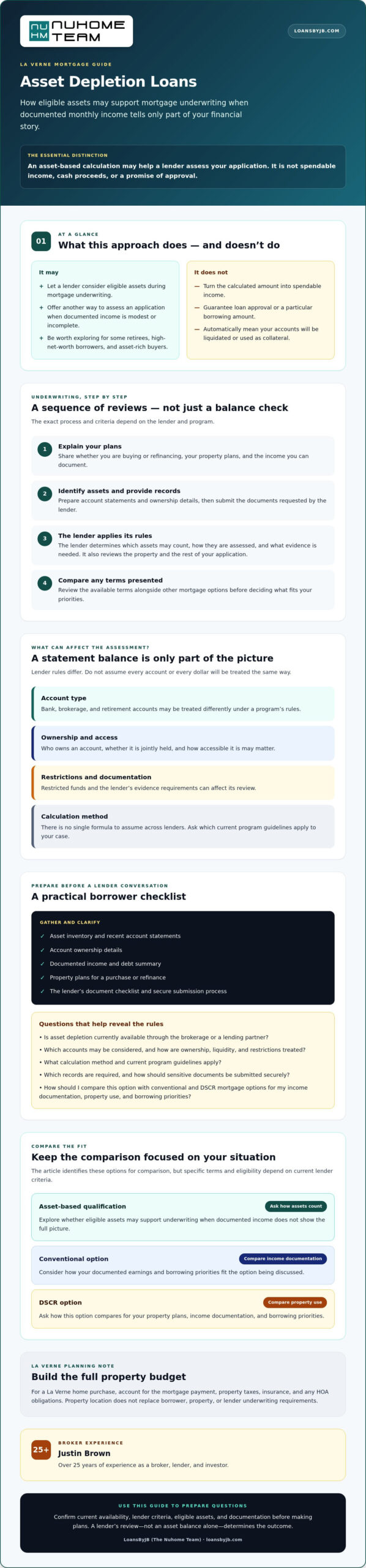
La Verne Borrower Checklist: Questions to Ask Before Applying
Go into a lender conversation with a clear picture of your finances and the property you’re considering. For an asset depletion loan La Verne borrowers should first confirm whether the program is currently available and which lender or lending partner would underwrite the application. Availability alone isn’t enough. Ask for the actual rules behind the review.
Prepare a current asset inventory, account ownership details, a list of debts and income sources, and information about the intended property. Include whether you plan to occupy it, any account restrictions, and planned withdrawals. For a La Verne purchase, discuss the full carrying costs, including property taxes, insurance, HOA dues if applicable, and other ongoing expenses. The mortgage payment alone won’t show the full affordability picture.
Questions that expose program fit and underwriting assumptions
Ask direct questions and get clear answers before moving money or shaping an offer around an assumed qualification result.
- Is an asset depletion program currently available, and which lending partner would underwrite it?
- Which assets may be considered, and how does the lender evaluate each account’s ownership, liquidity, and restrictions?
- Must any assets be liquidated, or are account statements and other documentation sufficient for review?
- What reserve, occupancy, and property eligibility rules apply to this specific program?
- Can the lender provide a written explanation of its calculation, assumptions, and required documents?
- If this program isn’t available or doesn’t fit, which other mortgage options should be compared?
Don’t rely on a calculation you can’t explain back. Ask how the lender’s assumptions affect the application and which conditions still need to be met. Since program guidelines vary, get answers from the lender reviewing your scenario.
Prepare for a focused local mortgage conversation
Describe the La Verne property, your intended occupancy, purchase timeline, and realistic monthly budget. Share debts, income sources, account ownership, restrictions, and planned withdrawals accurately. Changing accounts or moving funds before understanding the lender’s documentation requirements can complicate the review, so ask first.
A personalized review can connect the property costs to your complete financial picture and help identify questions to resolve before making an offer. Justin Brown brings over 25 years of experience as a broker, lender, and investor. Discuss your La Verne mortgage scenario with LoansByJB, and confirm current program availability and lender requirements before relying on an asset-based path.
Find an Asset Depletion Loan in La Verne With a Broker
Start a mortgage conversation with your full financial picture, not a preselected loan label. LoansByJB, The Nuhome Team, is a Southern California mortgage brokerage serving La Verne and nearby communities, with experience handling complex financing scenarios. Justin Brown has over 25 years of experience as a broker, lender, and investor. That background can help frame useful questions, but asset depletion availability and qualification depend on current lender programs and underwriting.
What a tailored review should clarify
First, confirm whether an asset depletion option is currently accessible through the brokerage’s lending network and which lender would review the application. A focused review should consider how that lender may assess your assets, income, debts, property, and objectives. It should also identify which documents and program conditions need verification. If this path doesn’t fit, ask which other mortgage structures merit comparison. The goal is a clear assessment, not a premature promise.
Before relying on a proposed calculation, ask the lender to explain its assumptions in plain language. Find out what information is missing, which conditions remain unresolved, and how the property and intended occupancy factor into its decision. When comparing options, ask how each differs in qualification approach and documentation. You should understand what the lender has confirmed and what still depends on underwriting.
Move forward with clear expectations
Bring organized records and answer questions accurately. Don’t transfer or liquidate assets to shape an application before understanding the lender’s requirements and any potential consequences. Ask whether a change in account ownership or access could affect documentation or review. A careful conversation can help you decide what to prepare next, without treating an initial discussion as approval or a commitment to specific terms.
If you’re considering an asset depletion loan La Verne borrowers can explore through a lender, make program availability the first question. Then discuss fit, required records, assumptions, conditions, and alternatives. Start a conversation about your La Verne mortgage options with LoansByJB. Any application remains subject to the selected lender’s review and underwriting decision.
Take Your Next Mortgage Step With a Clearer Picture
An asset depletion loan La Verne borrowers explore may bring eligible assets into the mortgage discussion when documented income tells only part of the story. Lender calculations vary, however, and assets don’t guarantee approval. Confirm current program availability, account rules, documentation, and underwriting conditions before making decisions.
Compare asset-based qualification with conventional options and, for an investment property, ask whether DSCR financing may fit. Prepare an asset inventory and a budget that includes taxes, insurance, HOA dues, and other property costs. Those details make a lender conversation more focused.
LoansByJB serves La Verne and nearby Southern California communities. Justin Brown has over 25 years of experience as a broker, lender, and investor, and the firm has guided clients through thousands of transactions. Ask whether an asset depletion option is currently accessible and verify applicable licensing details. Discuss your La Verne mortgage options with LoansByJB to compare possible paths and clarify what the lender still needs to review.
Frequently Asked Questions
What is an asset depletion loan?
An asset depletion loan is a mortgage qualification approach in which a lender may evaluate eligible assets when reviewing your application. The lender sets its own rules for account types, documentation, and calculations. This approach doesn’t guarantee approval or create spendable income, and it doesn’t necessarily require you to use or liquidate assets. Ask the lender to explain its current method and how it would apply to your financial picture.
Can I qualify for an asset depletion loan in La Verne if I am retired?
Retirement alone doesn’t qualify or disqualify you. For an asset depletion loan La Verne borrowers may explore, a lender can review eligible assets alongside documented income, debts, property details, and program requirements. Confirm that a suitable program is currently available and ask how your specific accounts would be treated. A mortgage professional can help compare potential paths, but only the lender reviewing your application can determine eligibility.
Do I have to withdraw my assets to get an asset depletion mortgage?
Not necessarily. Some programs may use an underwriting calculation without requiring you to spend or liquidate assets, but treatment varies by lender and account type. Ownership, access restrictions, liquidity, and supporting records can all matter. Don’t sell investments or withdraw retirement funds based on assumptions. First ask the lender what its program requires, and consult an appropriate tax or financial professional about potential consequences before making changes.
Which assets can a lender count for an asset depletion loan?
There isn’t one asset list that applies to every lender. Bank and investment accounts, retirement funds, jointly held assets, and restricted funds may receive different treatment under a particular program’s rules. Ask for the current eligibility criteria and documentation checklist. Have the lender explain how it evaluates each account, including any exclusions or adjustments, before relying on an estimated qualification or making financial decisions around it.
Is an asset depletion loan better than a DSCR loan?
Neither option is automatically better. Asset depletion underwriting focuses on eligible borrower assets, while a DSCR loan generally assesses an investment property’s income in relation to its debt obligations. The useful comparison depends on the property, intended use, your finances, and available programs. Ask the lender to compare eligibility, documentation, proposed terms, and risks for your scenario rather than assuming one path will be cheaper or easier.
How do I apply for an asset depletion loan in La Verne?
First, confirm that a lender currently offers an applicable program. Organize an asset inventory, account statements, debt and income information, and basic details about the La Verne property. Ask how accounts are evaluated, which documents are required, and what alternatives to compare. LoansByJB serves Southern California communities including La Verne, Claremont, San Dimas, Upland, Rancho Cucamonga, Glendora, and Downey. Approval depends on full lender underwriting.
Need the mortgage math checked?
Talk through the loan before you guess.
Use the estimator, request a refinance quote, or book a call with The Nuhome Team. We will help you compare the options that actually fit the file.
This is not a commitment to lend. Approval, terms, and pricing depend on credit, income, assets, property, and program guidelines.