
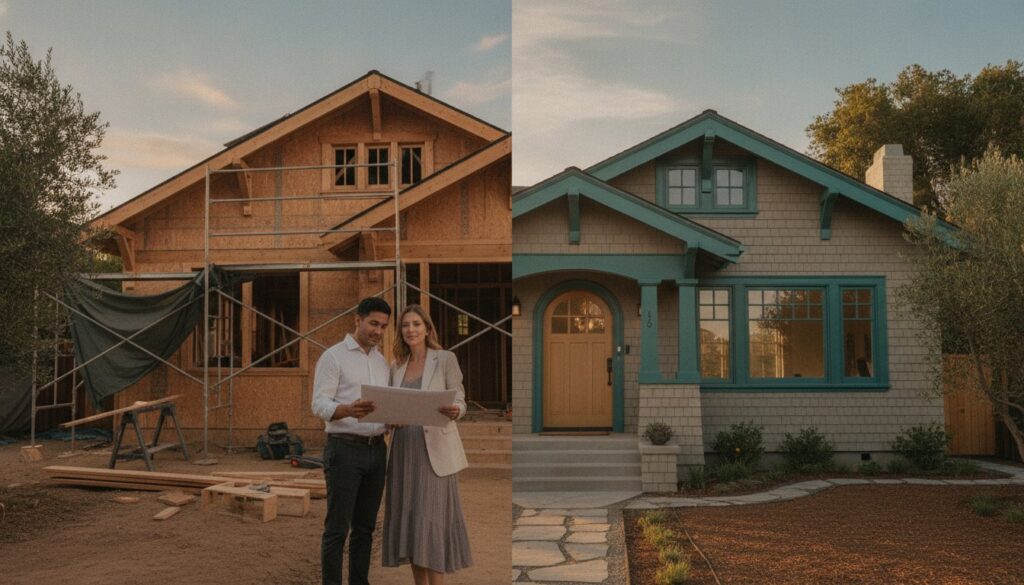
We know the anxiety that comes with these projects. HUD regulations feel like a maze. Finding a contractor who won’t disappear mid-draw is a legitimate concern. You want to avoid the rigid, “no-can-do” attitude of big-bank lenders who don’t understand investor math. This guide changes that. You’ll learn how to master the 203k process through a battle-tested investor lens. We will cover everything from the 2026 loan limits to navigating the HUD consultant relationship. This ensures your renovation stays on track and your equity stays protected.
Key Takeaways
- Stop fighting over overpriced turnkey homes and learn how to use a 203k renovation loan to force equity into “ugly” houses that other buyers overlook.
- Understand the critical differences between FHA 203k and Homestyle loans to choose the right financing weapon for your specific renovation goals.
- Success depends on your team, not just the rate; discover why you need a lender who understands complex HUD draw schedules and contractor management.
- Apply an “investor lens” to your primary residence by prioritizing high-yield upgrades like ADUs and square footage additions in competitive Southern California markets.
- Avoid the rigid standards of big banks by working with experts who treat your home purchase as a strategic asset rather than a liability.
The Fixer-Upper Opportunity: Why the 203k Renovation Loan is Your Equity Engine
Stop fighting over turnkey homes. In 2026, the Southern California market remains inventory-starved. Every “perfect” house attracts ten offers. The real money is in the “ugly” house on the block. The one with the peeling paint and the 1970s kitchen. Most buyers see a money pit. You should see an equity engine.
This 203k renovation loan is your secret weapon. It is a single loan that covers both your purchase price and your renovation budget. It falls under the FHA insured loan program, which means you get the benefit of a low down payment while funding massive upgrades. You only deal with one application. You pay one set of closing costs. You lock in one interest rate. It is efficient, fast, and designed to remove the barriers that stop most people from buying distressed properties. This isn’t just a loan. It’s a strategic entry point into neighborhoods you otherwise couldn’t afford.
FHA 203k Limited vs. Standard: Which One Do You Need?
You have two choices within the program. The Limited 203k is for cosmetic “lipstick” repairs. It allows for a renovation budget up to $75,000. Think new flooring, fresh paint, or updated appliances. It doesn’t allow for structural changes. The process is faster and doesn’t require a consultant, making it perfect for properties that just need a modern face-lift.
Choose the Standard 203k for major overhauls. If you are moving walls, fixing a foundation, or spending more than $75,000, this is your path. The Standard version requires a HUD-approved consultant on your team. This professional acts as a project manager to ensure the work meets FHA standards. It is more complex, but it is how you turn a shack into a mansion while forcing massive equity growth.
The Investor Lens: Buying for “After-Repair Value” (ARV)
Successful investors don’t buy based on what a house is worth today. They buy based on what it will be worth tomorrow. You must look past the current mess to the future equity. This requires calculating your “all-in” cost. This is the purchase price plus the renovation budget plus carrying costs. You want to find the gap between your total costs and the market ceiling.
Compare this total to the neighborhood ceiling. If the renovated house across the street sold for $900,000 and your all-in cost is $750,000, you just found $150,000 in equity. You aren’t just buying a home. You’re creating a high-yield asset. ARV is the target metric that determines whether your 203k project is a gold mine or a mistake.
203K vs. Homestyle: Choosing the Right Weapon for Your Renovation
Choosing the wrong financing is like bringing a knife to a gunfight. You need the right tool for the specific house you’re targeting. The 203k renovation loan is often the most approachable path for many buyers. It’s an FHA product built for accessibility. If your credit score is in the high 500s, you can still get in with 3.5% down. It’s the decisive choice for a primary residence buyer who needs to move fast on a distressed property.
The Fannie Mae Homestyle loan is the conventional alternative. It’s more flexible with the property but more rigid with the borrower. You generally need better credit and a higher down payment. Here is the quick breakdown of how they stack up — and if you want a detailed side-by-side analysis, our guide on the FHA 203k vs Homestyle loan breaks down exactly which renovation mortgage wins in 2026 based on your ARV leverage and carrying costs:
- FHA 203k: 3.5% down payment, 580+ credit score, limited to primary residences.
- Homestyle: 5% down (for primary), 620+ credit score, allows for second homes and investment properties.
Renovation Scope: Luxury vs. Habitability
The 203k renovation loan has specific rules regarding what you can build. It focuses on making a home safe, functional, and livable. You can’t use it to build a brand-new swimming pool or a detached luxury guest house from scratch. You can, however, repair an existing pool or completely modernize a kitchen. Check the official 203(k) program guidelines for the full list of allowed improvements. If your vision includes “luxury” additions from the ground up, the Homestyle loan offers that freedom. In Southern California, where high-end outdoor living adds massive value, this distinction is vital.
Mortgage Insurance (MIP vs. PMI) Long-Term Costs
Don’t ignore the carrying costs. FHA loans come with a Mortgage Insurance Premium (MIP) that usually stays for the life of the loan. Conventional Homestyle loans use Private Mortgage Insurance (PMI). You can cancel PMI once you hit 20% equity. This is where the “investor lens” becomes critical. Use the 203k to force the equity quickly. Once the renovation is done and your value has jumped, your next move is to refi into a 30 year fixed mortgage. This wipes out the permanent MIP and locks in your gains. If you want to map out this exit strategy, it pays to talk to a specialist who understands the math behind the renovation.
Navigating the 203k Red Tape: The Consultant, the Contractor, and the Closing
Success with a 203k renovation loan isn’t about the interest rate. It is about the team you assemble. Most traditional big-bank lenders fail here. They treat these like standard mortgages and then choke when the first draw request hits their desk. You need a lender who speaks “renovation” fluently. Your first step is getting pre-approved by someone who understands how to navigate HUD red tape without slowing down your closing. This is a project management challenge as much as a financial one.
The appraisal is the pivot point of the entire deal. Unlike a standard purchase, the appraiser calculates the “as-completed” value. They look at what the house will be worth once your vision is realized. This figure dictates your total loan amount. If the math doesn’t pencil out against the neighborhood ceiling, the deal dies. This is why having a savvy team is vital for making the FHA 203(k) loan for investors a viable wealth-building tool in 2026.
Vetting Your Contractor for 203k Success
Don’t hire a handyman for a 203k project. You need a professional who passes the “Three S” Test: Stability, Scrutiny, and Schedule. Most contractors fail because they lack the liquidity to start work before the first draw. FHA rules don’t allow for massive upfront deposits. Your contractor must have the financial strength to carry material costs and labor for the first phase. If they can’t handle the paperwork or the rigid draw schedule, they will sink your project. We vet for professionals who are organized enough to meet HUD’s high standards.
The HUD Consultant: Your Best Friend or Your Worst Enemy?
For Standard 203k loans, a HUD Consultant is mandatory. They aren’t just another layer of bureaucracy. They are your shield. The consultant creates the “Work Write-Up,” which acts as the master blueprint for your renovation. They inspect the work at every stage before funds are released. This protects you from shoddy craftsmanship and protects the lender’s collateral. Managing this relationship is the key to a stress-free project. For a deep dive into the necessary documentation, check out our fha 203k loan requirements for a complete paperwork breakdown. They keep the project moving, ensuring the contractor gets paid and the equity stays in your pocket.

The Investor Lens: Maximizing ROI on Your Southern California Renovation
In high-stakes markets like Claremont or Upland, you cannot afford to over-improve. Every dollar spent must return two. Using a 203k renovation loan gives you the capital, but your investor lens provides the strategy. Focus on high-yield repairs that move the needle on your appraisal. Kitchens and bathrooms are the obvious choices. However, in 2026, the real wealth is built through square footage. Adding a bedroom or a bathroom isn’t just a comfort move. It is a calculated equity play that changes your home’s comparable value.
Factor in your carrying costs from day one. Your mortgage payments don’t stop just because the kitchen is gutted. Include these in your all-in math to avoid a cash crunch. You also need to define your exit strategy before the first hammer swings. Are you staying for the long haul? Or is this a live-in flip where you eventually move out and refinance into a dscr loan? A DSCR loan allows you to pivot to a rental property based on the home’s income rather than your personal tax returns. Knowing your end game prevents you from making short-sighted design choices that don’t appeal to future tenants. If you’re considering pivoting from a primary residence renovation to a full investment property flip, understanding how to finance a fix and flip with the right capital stack will protect your margins and maximize your return.
Leveraging ADUs with a 203k Loan
California’s ADU laws are a gift to the savvy homeowner. Combining these laws with 203k financing is the ultimate house hack. You can convert a garage or build a detached unit to offset your entire mortgage payment. This isn’t just about extra space. It is about cash flow. You can often use projected rental income from the future unit to qualify for a larger loan amount. This allows you to build the unit and the equity simultaneously without draining your personal savings.
Avoiding the “Emotional Fluff” Trap
Custom Italian marble and gold fixtures are profit killers. Buyers and renters in Southern California want clean, modern, and functional. Stick to the Work Write-Up created by your HUD consultant. Deviating with emotional “change orders” is a fast track to a budget disaster. Remember that every project requires a contingency reserve of 10-20% to handle the inevitable surprises that hide behind old walls. If you want to see if your project math pencils out, contact us for a real conversation about your renovation strategy.
Why Direct Banks Fail at 203k (and How LoansByJB Wins)
Most big banks view a 203k renovation loan as a liability. They hate the paperwork. They hate the draw schedules. They want easy, cookie-cutter files that fit a rigid conveyor belt. We don’t. At LoansByJB (The Nuhome Team), we see these loans as a strategic tool for wealth creation. We don’t just stare at your credit score and hit a button. We have a “Real Conversation” about your whole financial picture. We look at your debt-to-income ratio through a lens of possibility, not just restriction. While a big bank might reject you for a minor oversight in your contractor’s bid, we work with you to fix it. We understand that in cities like Glendora or Rancho Cucamonga, the property’s potential often outweighs its current state.
In the Southern California market, speed and reputation are everything. If you are bidding on a fixer-upper in Los Angeles or San Bernardino, you are likely competing against “all-cash” investors. A standard 203k offer can look like a headache to a listing agent who has been burned by slow lenders. We change that narrative. We advocate for your offer by showing the listing side that we have the street-smart expertise to close on time. We understand the carrying costs and the exit strategies. We make sure your project isn’t just a dream, but a closed deal that creates immediate equity.
The Rebel Expert Advantage
Justin Brown brings 25 years of experience as a broker, lender, and investor to the table. You aren’t dealing with a national call center rep who has never seen a renovation draw or stepped foot in a construction zone. You’re talking to a local expert who knows the nuances of the 2026 market. We close these loans on time, period. LoansByJB (The Nuhome Team) understands the specific pressures of the SoCal market better than any impersonal entity ever could. We navigate the HUD red tape so you don’t have to. We act as your advocates in a system that usually tries to slow you down with unnecessary bureaucracy.
Getting Started: Your Renovation Roadmap
We don’t believe in wasting time. In the first 48 hours, we need your basic financials and a clear vision of the property. This jumpstarts your 203k renovation loan application and puts you in a position to move when the right “ugly” house hits the market. Our team moves with the urgency that the local market demands. We don’t let your application sit on a desk for weeks. We push for the as-completed appraisal and the HUD work write-up simultaneously to shave days off the timeline.
For a deeper dive into the mechanics of equity building, read our comprehensive guide on the fha 203k loan. It is time to stop dreaming about “what if” and start building your future. Stop dialing the big banks and start dialing for a street-smart consultation that actually gets results. We are ready to help you turn that money pit into your most valuable asset.
Lock in Your Equity Before the Competition Wakes Up
You now have the blueprint. The 203k renovation loan isn’t just a safety net for broken houses; it’s a high-performance engine for creating wealth in an inventory-starved market. We have covered how to choose the right financial weapon and why your team is more important than your interest rate. You understand that the “ugly” house on the block is your fastest route to massive equity in Southern California.
Big banks will continue to fumble these complex files. They don’t have the 25+ years of investor-focused experience that we bring to every deal. We navigate the red tape so you can focus on the ROI. Don’t let another year pass while you wait for the perfect turnkey home to appear. It won’t. You have to build it yourself.
Talk to Justin Brown and LoansByJB (The Nuhome Team) about your 203k strategy today. We provide the decisive, local expertise you need to win against cash buyers and rigid lenders. Stop dreaming and start building. Your future asset is waiting for you to find it.
Frequently Asked Questions
Is a 203k renovation loan worth it in 2026?
Absolutely. In 2026, Southern California has a severe shortage of turnkey homes. Paying a premium for a finished house is a sucker’s bet. A 203k renovation loan lets you buy the ugly house at a discount and build your own equity immediately. You avoid bidding wars on perfect properties and create a custom home that is worth more than your all-in cost. It is the most efficient market hack available.
What is the maximum amount I can borrow for a 203k loan?
Your maximum loan amount is tied to the FHA loan limits for your specific county. In 2026, the ceiling for high-cost areas like Los Angeles is $1,249,125 for a single-family home. The floor in low-cost areas is $541,287. This total must cover both the purchase price and the renovation budget. We always check the current HUD limits to ensure your project math fits the local regulations.
Can I do the renovation work myself with a 203k loan?
No. HUD regulations generally require a licensed, insured contractor to perform the work. This is a common point of confusion. The program is designed to ensure the home meets safety and habitability standards, which means sweat equity from the borrower is prohibited. Lenders want to see professional contracts and verifiable credentials. This protects the property’s value and ensures the work is completed correctly and on time without cutting corners.
How long does it take to close a 203k loan compared to a standard mortgage?
Expect a 45 to 60-day closing window. A standard mortgage might close in 21 to 30 days, but the 203k requires extra steps. You need a HUD consultant’s work write-up, contractor bids, and an as-completed appraisal. While big banks might take 90 days or fail entirely, our street-smart approach streamlines the paperwork. We push the process forward to keep you competitive even when timing is tight for the seller.
What are the credit score requirements for an FHA 203k loan?
You can qualify for a 3.5% down payment with a credit score as low as 580. If your score falls between 500 and 579, a 10% down payment is required. Unlike conventional loans that penalize you for minor credit dings, the FHA program is built for accessibility. We look at your whole financial picture to find a path forward. This flexibility makes it a powerful tool for sidelined buyers in a tough market.
Can I use a 203k loan to buy a multi-unit property?
Yes, you can use this loan for properties with up to four units. This is a massive house-hacking opportunity. You must live in one of the units as your primary residence, but you can renovate the entire building. The 2026 FHA loan limits for multi-unit properties are significantly higher than single-family homes. This allows you to fix up a duplex or fourplex and increase the rental income immediately after the rehab.
What happens if the renovation costs more than the original estimate?
This is why the mandatory contingency reserve exists. Every 203k renovation loan includes an extra 10% to 20% of the repair budget to cover unforeseen issues. If you open a wall and find outdated wiring, the reserve pays for the fix. If you don’t use the reserve money, it is applied back to your principal balance once the project is finished. It acts as a financial safety net for your investment.
Do sellers accept 203k loan offers in a competitive market?
They will if your lender is an expert. In a competitive market, listing agents fear this loan because of potential delays. We overcome this by advocating for you directly. We explain to the seller that the loan is already vetted and the team is experienced. By showing that we close on time and understand the HUD process, we make your offer stand out against cash buyers who are low-balling the price. For investors who want to go beyond a primary residence and scale their distressed property strategy, our complete breakdown of how to finance a fix and flip in 2026 covers the full range of capital options available in the Southern California market.
Need the mortgage math checked?
Talk through the loan before you guess.
Use the estimator, request a refinance quote, or book a call with The Nuhome Team. We will help you compare the options that actually fit the file.
This is not a commitment to lend. Approval, terms, and pricing depend on credit, income, assets, property, and program guidelines.